
In the 1970s French feminist Françoise d’Eaubonne, coined the word Eco feminism during a period when environmental movements and feminist struggles were beginning to overlap. Ecofeminsm examines the relationship between women and environment. Carolyn Merchant’s book The Death of Nature, Wangaari Mathaai’sGreen Belt Movement and Vandana Shiva book Staying Alive propelled it from the academic world into a philosophical and social movement.
Marginalization of women is interweaved with the exploitation of nature. Generally, women hold less monetary wealth and rely on the natural environment more, than men. Hence, they are more likely to be displaced by climate change. In rural regions they gather firewood, cultivate crops, fetch water and manage their household chores. When ecological systems collapse, their daily labour becomes heavy. They are forced to walk longer distances for water, spend hours searching for fuel, and struggle to feed their families as agricultural yields decline. This not only increases their physical burdens but also reshapes their time, health, and dignity. In urban regions their duties may differ yet they sustain families and manage households. Ecofeminism, thus is a lived reality for millions of women across the world.
Ecofeminism, however, is not limited to hardships- it propels us towards knowledge. For generations, women have had a more intimate relationship with nature. They have been quiet custodians of ecological wisdom knowing which plants heal, which seeds endure drought, which farming practices align with local climates. Ecofeminist stories are especially important because they emphasise that the well-being of people and of our planet are deeply connected. They explore the relationship between humanity and nature; not as one of domination, but of coexistence, empathy, and mutual responsibility
Literature and folklore have been carrying eco‑feminist ideas long before we named them as ecofeminist. Many Indian folktales portray women sharing a close bond with rivers, forests, and animals, showing how female characters are both guardians of the land and mediators between humans and the non‑human world.
In a Gond folklore, a young woman namedKanjaari, senses that the forest spirits are unhappy because of the relentless chopping of trees by the village men. She warns the community, but no one listens. When a drought hits, she enters the forest alone, carrying offerings of seeds, grain, and water. She sings to the trees, and asks for forgiveness. That night, the skies open and it rains. The villagers then realise theinterconnectedness of women, nature, and survival. There are many other stories: like that of Sita, in Ramayana, who is born from a furrow in the earth, raised amid fields, or Gaia in Greek mythology who creates mountains, seas and living beings or the Japanese folktale of The Bamboo Maiden- all these reiterate the deep connection that women and nature share.
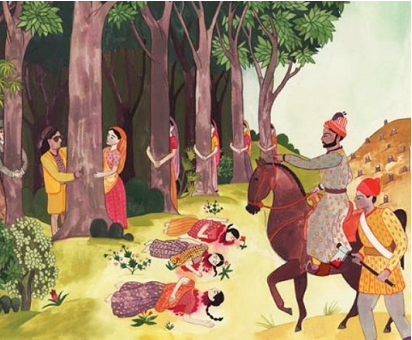
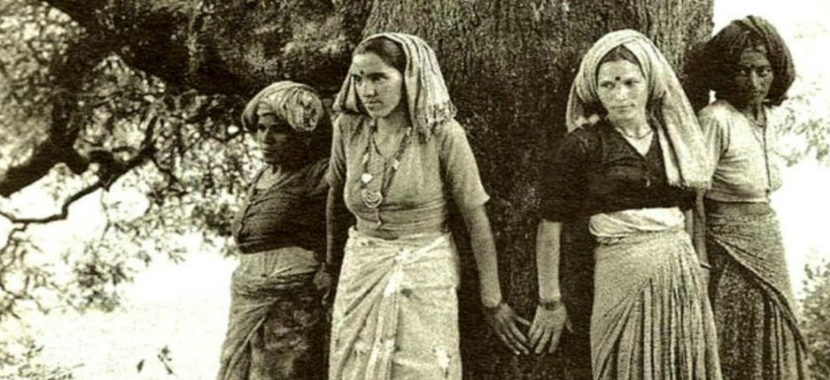
In the recent years, the story of Amrita Devi Bishnoi who hugged a tree saying “A chopped head is cheaper than a felled tree,” or the Chipko movement in India or Green Belt Movement in Kenya, all encourage us to recognize caring for the environment as an act of resistance and storytelling as a form of healing.
Bollywood has also contributed to many such stories- Movies like Sherni, Dor, Kadvi Hawa, Swades and many more.
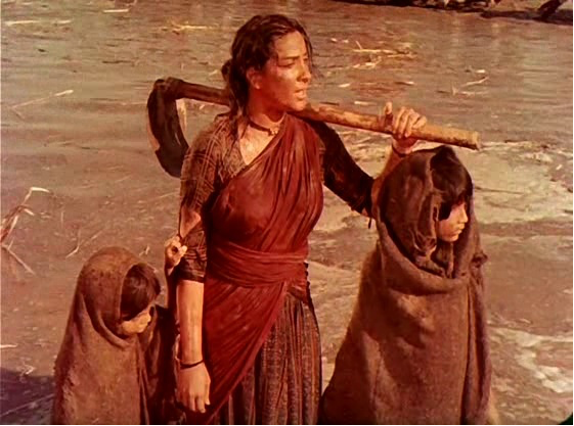
In the iconic Bollywood movie Mother IndiaRadha’s life is inseparable from the land she tills. The soil becomes both her source of strength and a witness to her suffering, making the film a profound statement on motherhood, resilience, and humanity’s dependence on the earth.
Ecofeminist stories thus remind us that both nature and women must be respected. By giving voice to women and to nature, ecofeminist stories invite us to create a more compassionate, sustainable, and interconnected world.
References:
- https://www.britannica.com/topic/ecofeminism
- https://www.mindbodygreen.com/articles/ecofeminism-history-and-principles
- Shiva, Vandana. Staying Alive: Women, Ecology and Development (1988).
- https://www.mindbodygreen.com/articles/ecofeminism-history-and-principles
About Dr. Aarti Punjabi:
Dr. Aarti Punjabi is a Professor, Author, Storyteller and Podcaster. She has been a faculty for Business communication in leading business schools for over a decade. A trained Voice-over artist and a passionate storyteller, Aarti has performed stories at Gaatha, various open mics, schools and museums. Winner of Podcast Creation contest hosted by Kommune she narrates Hindi stories on her podcast, ‘Kahani Humari Tumhari,’ which is available across audio platforms. She has done voice-overs for advertisements, short films, and plays. Her debut book Lalita and Other Short Stories is an anthology of ten poignant tales about the unseen struggles of Indian women.
One Response
A well researched article. Aarti. We are bringing Eco Feminist tales to MIST 2026.